
Protein is one of those nutrients we all know is "important," yet very few of us actually track whether we're getting enough of it. Most people assume protein deficiency only happens to athletes who skip their protein shake or to people in extreme poverty. In reality, it is far more common — and far more everyday — than that.
If you've been feeling low on energy, noticing more hair fall than usual, or wondering why you're not bouncing back from illness the way you used to, low protein intake could be part of the answer. This blog breaks down what protein deficiency actually is, how to spot it, why it happens, and how to fix it naturally.
What Is Protein Deficiency?
Protein deficiency happens when the body isn't getting enough protein to meet its daily needs. Protein is made up of amino acids — the building blocks your body uses to repair tissue, build muscle, produce hormones and enzymes, and support your immune system.
Unlike some deficiencies that show up suddenly, protein deficiency usually develops slowly. Your body will first draw protein from less critical stores (like muscle) before symptoms become obvious, which is why many people don't realize it's happening until it has been going on for months. #ProteinHealth
Why Protein Is Important for the Body
Protein plays a role in almost every system in the body:
- Muscle health — protein repairs and rebuilds muscle tissue, especially after physical activity or daily wear and tear.
- Energy levels — protein helps stabilize blood sugar, preventing the energy crashes that come from carb-heavy meals.
- Immunity — antibodies, which help the body fight infection, are made of protein.
- Recovery — whether it's healing from an illness, a minor injury, or a workout, protein speeds up tissue repair.
- Hair, skin, and nails — keratin, the protein that makes up hair and nails, depends on adequate protein intake to stay strong.
In short, protein isn't just for building muscle — it's for keeping your whole body running smoothly.
💡 Did You Know?
Your body cannot store protein the way it stores fat.

Common Signs and Symptoms
Protein deficiency doesn't always look dramatic. Often, it shows up as symptoms people brush off as "just being tired" or "getting older":
- Constant fatigue, even with enough sleep
- Hair thinning or excessive hair fall
- Slow recovery from colds, infections, or injuries
- Frequent cravings for sugar or carbs
- Gradual loss of muscle tone or strength
- Brittle nails or dry skin
- Swelling in the hands, feet, or belly (in more severe cases)
- Difficulty concentrating or "brain fog"
For example, someone who used to recover from a cold in three days but now takes a week, or someone who feels hungry again an hour after a full meal, may be dealing with inadequate protein intake without realizing it. #NutritionAwareness
Causes of Low Protein Intake
| Cause | How It Affects Protein Intake |
|---|
| 🍚 Carb-Heavy Meals | Meals centered around rice, bread, or refined grains often provide too little protein. |
| ⏰ Skipping Meals or Eating on the Go | Busy schedules and processed snacks usually lack enough protein to meet daily needs. |
| 🥗 Restrictive Dieting | Cutting calories without proper meal planning can significantly reduce protein intake. |
| 🌱 Poorly Planned Vegetarian or Vegan Diets | Plant-based diets can meet protein needs, but they require a variety of protein-rich foods and careful planning. |
| 🏃 Increased Physical Demands | Pregnancy, intense exercise, illness, or recovery increase the body's protein requirements. |
| 👴 Aging | As we age, the body becomes less efficient at absorbing and utilizing protein, increasing daily protein needs. |

Who May Need to Pay Extra Attention
While anyone can develop a protein gap, certain groups are at higher risk:
- Older adults, due to reduced absorption and appetite
- Vegetarians and vegans, especially those relying mainly on grains and vegetables
- Busy professionals who eat convenience food or skip meals
- Pregnant and breastfeeding women, who have increased protein needs
- People recovering from surgery or illness
- Those on restrictive or fad diets
If you fall into one of these categories, it's worth being more intentional about protein at every meal. #PreventiveHealth
How to Fix It Naturally
The good news is that correcting a protein gap doesn't require supplements or a complicated diet plan — small, consistent changes go a long way:
- Add protein to every meal, not just one meal a day
- Start your day with protein — eggs, milk, paneer, or sprouts instead of only tea and toast
- Replace processed snacks with nuts, roasted chana, boiled eggs, or curd
- Plan meals around a protein source first, then build the rest of the plate around it
- Spread protein through the day rather than loading it all into dinner
- Stay consistent — the body benefits more from steady daily intake than occasional high-protein meals #HealthyHabits
💡 QUICK TIP
Try to include a protein-rich food in every meal to help meet your daily protein requirements.
High-Protein Foods to Add
Some easy, accessible options for a typical Indian diet include:
- Dairy: milk, curd, paneer, cheese
- Legumes: dal, chana, rajma, moong
- Eggs: a simple, affordable, complete protein source
- Nuts and seeds: almonds, peanuts, pumpkin seeds
- Soy products: tofu, soy chunks
- Lean meats and fish, for non-vegetarians
- Sprouts, a low-cost, high-protein snack option
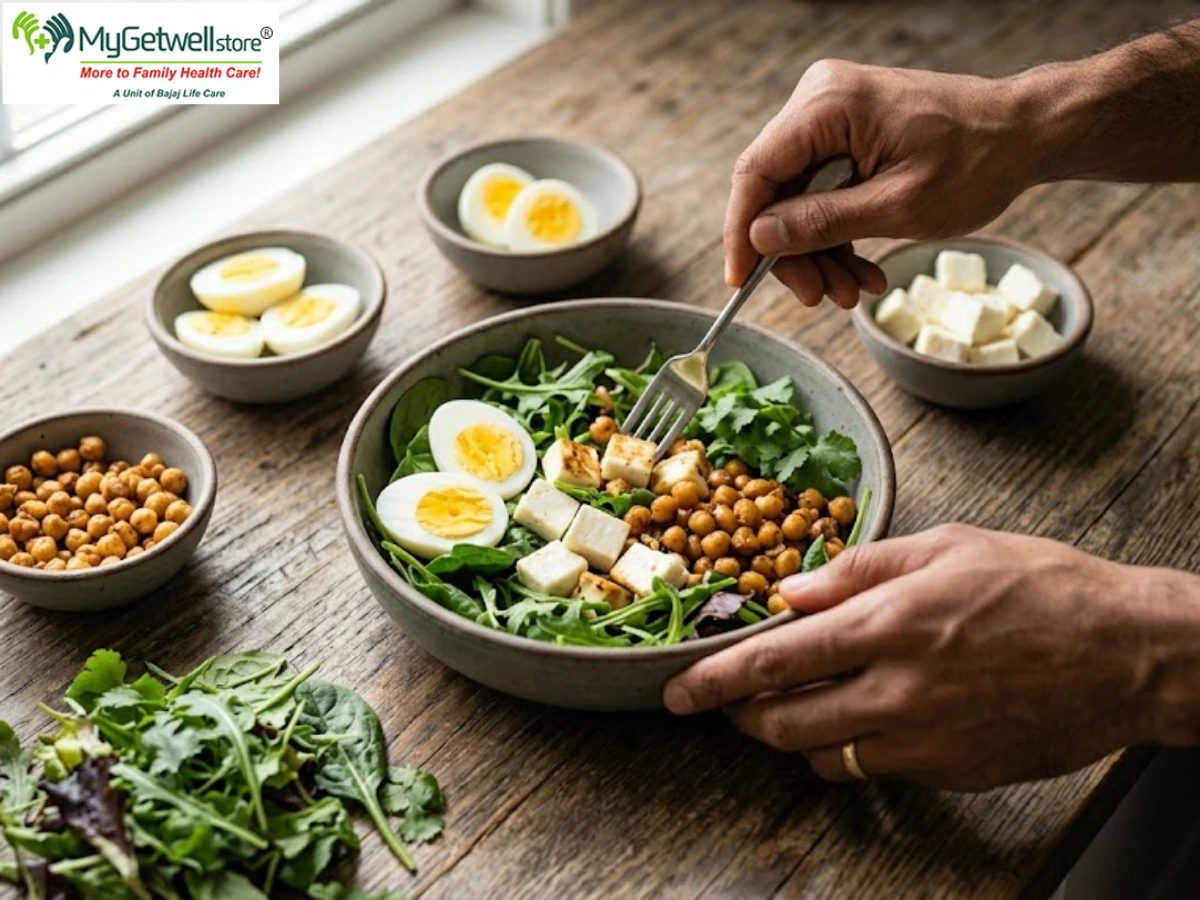
Even small additions — like a handful of nuts between meals or dal with every lunch — add up meaningfully over a week. #HealthyEating
When to Seek Medical Advice
Mild protein gaps can usually be corrected through diet alone. However, you should consult a doctor or nutritionist if you notice:
- Persistent swelling in the legs, feet, or abdomen
- Significant, unexplained muscle loss
- Hair fall that continues despite dietary changes
- Frequent infections or very slow wound healing
- Ongoing fatigue that doesn't improve with rest or diet changes
These could indicate a more significant deficiency or an underlying condition that needs proper evaluation.
⚠️ Warning Signs
If you notice two or more of these symptoms for several weeks, review your diet and consult a healthcare professional if needed.
Conclusion
Protein deficiency is rarely sudden — it builds up quietly through daily habits, rushed meals, and routines that leave little room for planning. The encouraging part is that it's also one of the easiest gaps to close. By paying attention to the signs, understanding your personal risk factors, and making small, consistent changes to your meals, you can support your energy, immunity, and long-term health — starting with your very next meal. #Wellness
This article is for general awareness and does not replace professional medical advice. If you have ongoing symptoms, please consult a doctor or qualified nutritionist.