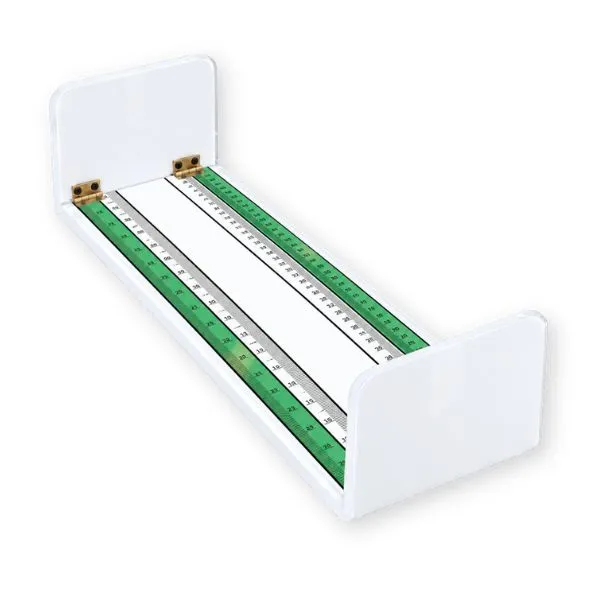
Infantometer – Baby Length Measuring Scale
The Alpha Infantometer available from Hindustan Scale Company features an acrylic base, an adjustable sliding side and a graduated scale for measuring infant length. Its foldable construction supports convenient storage when the instrument is not in use.
If you are looking for an infantometer price in India, product specifications or an infant length measuring scale for a hospital or clinic, review the details below before purchasing.
Infantometer Price in India
The listed price of this infantometer is ₹2,360, subject to confirmation of current availability, applicable taxes and delivery charges.
When comparing the price of an infantometer, consider its measuring range, scale graduations, material, portability, ease of cleaning, warranty and suitability for your intended setting.
Hospitals, nursing homes, paediatric clinics, medical equipment distributors and institutional buyers can enquire about current pricing and bulk purchase requirements.
Looking to buy an infantometer online? Review the specifications and confirm the final payable price and delivery terms before placing your order.
Infantometer Specifications
| Specification | Product details |
|---|---|
| Product name | Infantometer Scale for Baby Length Measurement |
| Base material | Acrylic |
| Design | Foldable and adjustable |
| Measuring scale | Centimetres and inches |
| Stated measuring range | Up to 90 cm |
| Approximate dimensions | 53 × 18 × 3 cm, as listed |
| Approximate weight | 1 kg |
| Country of origin | India |
Confirm the exact measuring range, dimensions, material and other specifications for the supplied model before purchase.
What Is an Infantometer? Infantometer Meaning and Definition
An infantometer is an anthropometric measuring instrument used to measure the recumbent length of a baby or young infant. Recumbent length means the distance from the top of the head to the bottom of the feet while the child is lying flat.
The meaning of infantometer is therefore a measuring device specifically designed for assessing an infant's body length. Unlike a conventional standing height scale, an infantometer allows measurement in a lying position.
What Is an Infantometer Used For?
The primary use of an infantometer is to measure the length of newborns and infants. The recorded measurement may be used as part of routine growth monitoring and paediatric assessments by trained healthcare personnel.
Common settings include:
Hospitals and maternity wards
Neonatal and paediatric care units
Paediatric clinics and nursing homes
Primary healthcare centres
Community health and child development programmes
Medical training and teaching facilities
An infantometer measures length; it does not measure body weight or independently diagnose a health condition.
Infantometer Parts and Their Uses
The main parts of a conventional infantometer include:
Measuring base or board: Provides a flat surface on which the infant lies.
Fixed headboard: Provides a reference point against which the infant's head is positioned.
Sliding footboard: Moves towards the infant's feet to establish the other end of the measurement.
Graduated scale: Displays the measurement in the units marked on the instrument.
Folding sections or side supports: Where fitted, support storage and positioning.
The exact parts and construction vary by model. Refer to the manufacturer's instructions for the supplied instrument.
How to Use an Infantometer: Measurement Procedure
Infant length should be measured by a trained person following the applicable healthcare protocol.
Place the infantometer on a firm, level and stable surface.
Check that the measuring board and sliding footboard are properly positioned and that the scale is readable.
Place the infant on the board in a lying position, with the head against the fixed headboard.
Position the head correctly and keep the body aligned along the measuring board.
Gently straighten the infant's legs according to the recommended measurement procedure.
Move the sliding footboard until it meets the infant's heels without applying excessive pressure.
Read the measurement at the designated scale and record it using the correct units.
Repeat the measurement when required by the applicable protocol to check consistency.
An infant's comfort and safety must be maintained throughout the process. Follow your facility's procedures and the manufacturer's instructions.
How to Read an Infantometer Measurement
Read the graduation where the sliding footboard indicates the infant's length. Confirm whether the scale is marked in centimetres, inches or both.
Record the measurement in the appropriate unit and precision supported by the instrument. Do not report more decimal places than the scale supports. If the reading is unclear or repeated readings differ, reposition the infant and repeat the measurement according to the applicable protocol.
Infantometer Calibration and Maintenance
A manual infantometer with a fixed graduated scale may not have an electronic calibration function. However, its scale, fixed headboard, sliding footboard and overall alignment should be checked periodically according to the manufacturer's instructions and the facility's quality-control procedures.
Keep the instrument clean and dry, use compatible cleaning products, and check for damaged graduations, loose components or a sliding footboard that does not move correctly. Do not modify the scale or attempt an adjustment without the appropriate instructions.
How to Choose an Infantometer
Before purchasing an infantometer for a hospital, clinic or healthcare programme, compare:
Measuring range appropriate to the intended population
Graduation interval and readability
Stability of the base and headboard
Smooth movement of the footboard
Material and cleaning requirements
Foldability, storage and transport needs
Manufacturer documentation and warranty
Price, tax treatment, delivery and after-sales support
Choose the instrument according to your facility's requirements and the specifications of the actual model.
Alternative Products
These other products might interest you