
Why Neck, Shoulder, and Lower Back Discomfort Is So Common Today
If you wake up with a stiff neck, feel a knot between your shoulder blades by noon, and end the day with an aching lower back, you are in very large company. Neck pain, shoulder pain and lower back pain are now among the most common reasons people in India visit a doctor or physiotherapist. The World Health Organization describes low back pain as one of the leading causes of disability worldwide.
The good news: for most people, this kind of everyday discomfort comes from daily habits, not serious disease. That means small changes, plus the right back support products, can make a real difference.
In this guide you will learn:
- Why neck, shoulder and lower back pain are so common today
- The most frequent causes (and what your body is telling you)
- Simple daily habits that help
- The best products for back pain relief at home, with links to buy

What Is Causing Neck, Shoulder and Lower Back Pain? (The 7 Main Reasons)
1. Long Hours of Sitting at a Desk
Most office and work from home back pain starts with sitting. When you sit for hours, your lower back muscles tire, the natural curve of your spine flattens, and your hips and hamstrings tighten. The result is a dull lower back ache that appears by afternoon.
Buying a better chair is not always possible, but adding a lumbar support cushion for your office chair gives your lower back the curve it needs.
2. "Tech Neck": Looking Down at Phones and Laptops
Your head weighs roughly 4 to 5 kg. When you bend it forward to read a phone, the muscles at the back of your neck and upper shoulders work much harder to hold it up. Doctors and physiotherapists call this tech neck or text neck, and it is a leading cause of neck and shoulder pain in students, professionals and even teenagers.
3. Rounded Shoulders and Poor Posture
Hunching over a keyboard or phone pulls your shoulders forward and tightens your chest while your upper back muscles get stretched and weak. Over time this creates that familiar burning ache between the shoulder blades. A posture corrector belt gently reminds your shoulders to stay back and open.
4. Sleeping in the Wrong Position
A pillow that is too high or too flat, or a sagging mattress, can leave your neck twisted for 7 to 8 hours. Waking up with a stiff neck or a sore lower back is a common sign of poor sleeping support.
5. Lack of Movement and Weak Core Muscles
Your spine is supported by muscles. When you rarely move, your core, glutes and back muscles weaken, and your spine takes extra load. Even people who exercise can suffer if they sit for most of the day.
6. Carrying Heavy Bags and Lifting Incorrectly
A heavy laptop bag on one shoulder, or lifting from the waist instead of the knees, strains the shoulder, neck and lumbar region. Over months, this uneven load becomes chronic discomfort.
7. Stress and Muscle Tension
When you are stressed, you unconsciously lift and tighten your shoulders. Stress-related tension is one of the most overlooked causes of neck and shoulder pain.
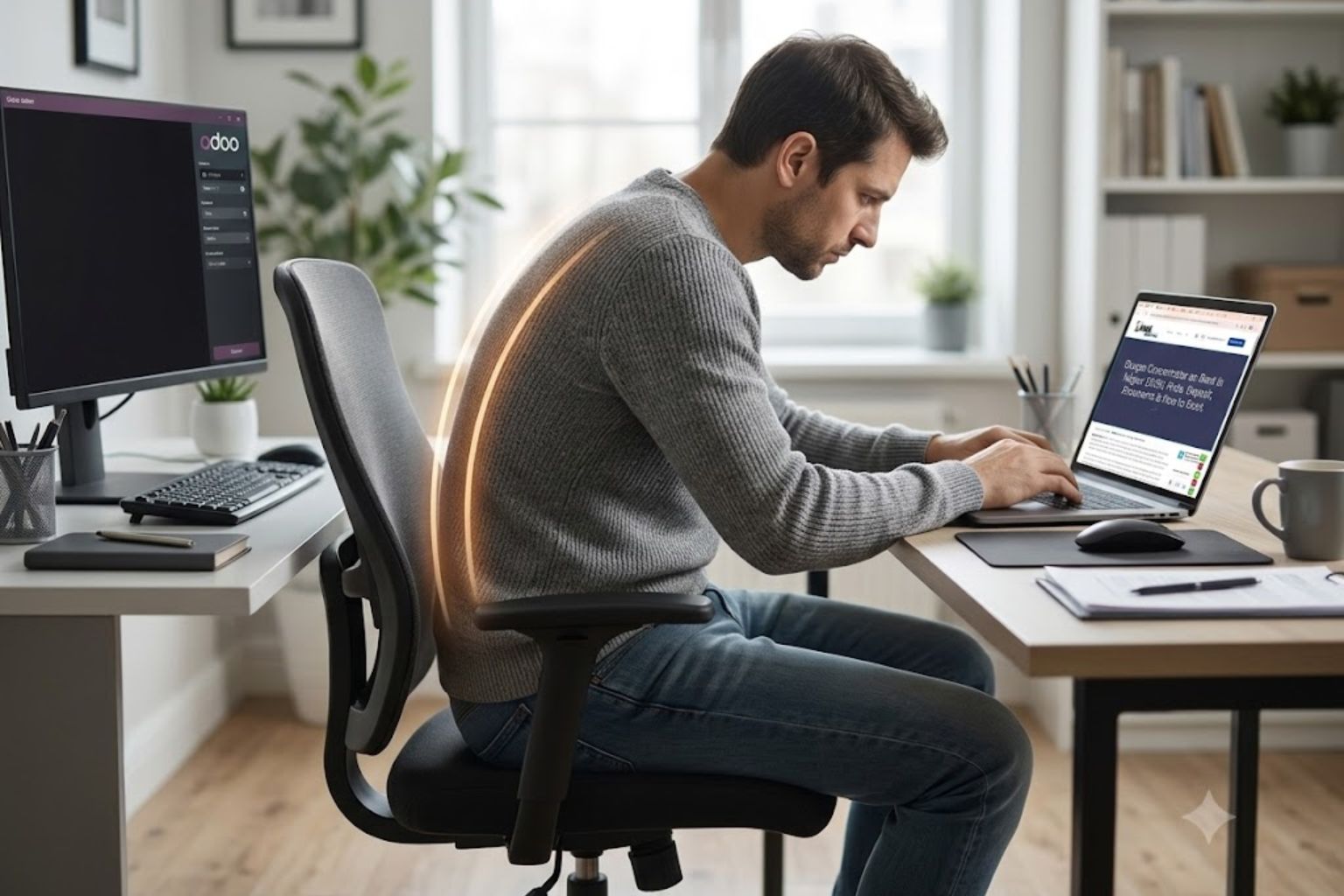
How These Three Problems Are Connected
Your neck, shoulders and lower back are parts of one chain. If your head drifts forward, your upper back rounds. If your upper back rounds, your pelvis tilts and your lower back takes extra strain. That is why people with neck pain often also complain of shoulder pain and lower back pain. Fixing only one area gives short-term relief. Supporting the whole chain gives lasting comfort.
Quick Daily Habits That Reduce Neck, Shoulder and Back Pain
- Raise your screen to eye level. Use a laptop stand or stack of books.
- Follow the 30-minute rule. Stand up, walk or stretch at least every 30 to 45 minutes.
- Keep your feet flat and your knees at about hip height while sitting.
- Sit with back support. Your lower back should touch the chair, not float away from it.
- Stretch your neck and chest for 2 minutes after waking and before bed.
- Switch bag shoulders or use a backpack with both straps.
- Use heat or gentle massage on tight muscles after a long day.
Best Products for Neck, Shoulder and Lower Back Pain Relief in India
Habits come first, but the right support products make those habits easier to keep. Here are options from the MyGetWellStore range, matched to the problem they help with.
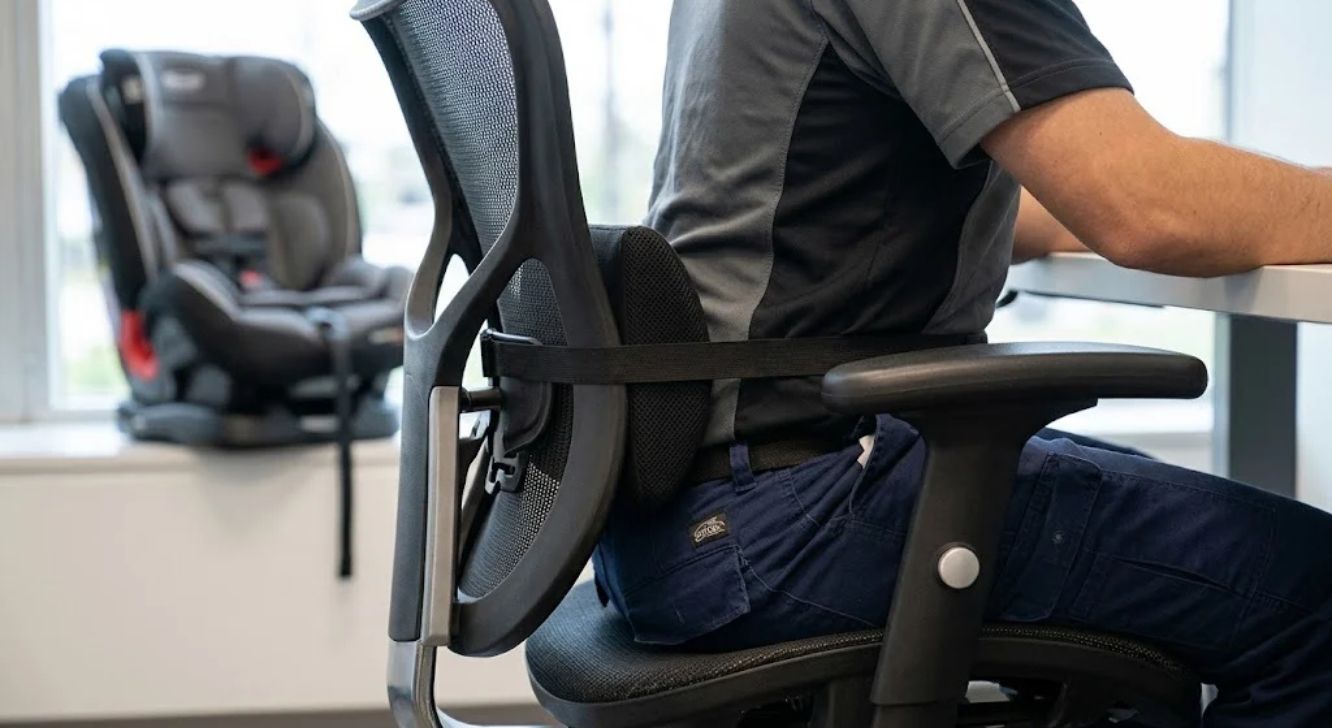
For Lower Back Pain from Sitting: Lumbar Support Cushions
If your pain starts after hours in a chair or car, a lumbar back support cushion is the simplest fix. It fills the gap behind your lower back and encourages a healthy spinal curve.
- Salo Lumbar Back Support Cushion for Office Chair & Car: our #1 pick in the back support category, from ₹1,050
- D-Shape Lumbar Back Support Cushion for Car & Office Chair: a compact shape that suits long drives and desk jobs, from ₹1,029
- Universal Back Rest Support for Bed, Chair & Car: one adjustable backrest for sitting up in bed, at your desk or in the car, from ₹1,399
For Rounded Shoulders and Upper Back Ache: Posture Correctors
A posture corrector belt is designed to pull your shoulders back and keep your upper spine aligned. It works best as a reminder tool: wear it for short periods (around 1 to 3 hours daily) while you build better posture habits, and take breaks.
- UM Adjustable & Breathable Upper Back Posture Brace: a breathable, adjustable brace and one of our hot-selling products, from ₹820
- Clavicle Brace with Velcro Belt: adjustable upper body support for shoulders and collarbone area, from ₹899
Looking for a detailed comparison? Read our full guide to the best back support belt and posture corrector in India.
For Everyday Lower Back Strain: Lumbar Support Belt
When your lower back feels tired while standing, walking or doing household work, a belt gives extra support to the area.
- Neoprene Lumbar Support Belt, Universal Fit: an adjustable back support belt for daily activities, from ₹1,499
For Stiff Necks and Sore Sleep: Wedge Pillow and Neck Massager
- Dr.Ortho Orthopedic Wedge Pillow for Elevated Sleeping Support: a hot-selling orthopedic wedge that helps you rest in a supported, elevated position, from ₹2,249
- Electric Shiatsu Pillow Massager for Neck, Back & Travel Use: a kneading shiatsu massager you can use on your neck, shoulders or lower back at home, in the car or while travelling, from ₹1,129
For Muscle Knots and Tight Shoulders: Massage Guns
A massage gun uses fast percussive pulses to relax tight muscles, which many people find useful after long hours at a desk or a workout. Pick based on your budget and how you plan to use it:
Product | Best for | Starting price |
|---|---|---|
[Handheld Massage Gun | Fascial Gun](https://www.mygetwellstore.com/shop/body-massager-9/handheld-massage-gun-6080) | Budget-friendly daily use (hot selling) |
Travel bag and office drawer (hot selling) | ₹1,100 | |
Deeper work with 9 interchangeable heads | ₹1,200 | |
Neck, shoulder, back, legs and feet, 3 heads | ₹1,399 | |
Handheld relief for the whole body | ₹1,599 | |
Electric hammer massager with speed control | ₹1,709 |
On a tighter budget? See our guide to the best body massager under ₹500 in India. You can also browse the complete body massager collection.
Prices shown were listed on the store at the time of writing and may change.
Which Product Should You Choose? A Quick Guide
Your main problem | Start with |
|---|---|
Lower back ache after sitting | Lumbar support cushion |
Slouching and rounded shoulders | Posture corrector belt |
Upper back and shoulder knots | Massage gun |
Stiff neck in the morning | Wedge pillow or shiatsu pillow massager |
Back tiredness while standing or doing chores | Lumbar support belt |
Pain while driving | Lumbar cushion for car |
For the best result, combine one support product (to prevent the strain) with one massager (to relax the muscles after the strain). Explore the full back support range, our orthopaedic equipment and physiotherapy equipment collections.
How to Use Back Support and Massage Products Safely
- Posture correctors: use for short periods, take breaks, and stop if you feel pain or numbness.
- Massage guns: use 10 to 15 minutes per session. Do not press on bones, joints, the front of the throat or directly on the spine.
- Lumbar cushions: place the cushion at your belt line so it fits the curve of your lower back.
- Be consistent: support products help most when combined with stretching and regular movement.
When Should You See a Doctor?
Everyday stiffness usually improves with better posture, movement and support. But please see a doctor or physiotherapist promptly if you have:
- Pain after a fall, accident or injury
- Numbness, tingling or weakness in your arms or legs
- Pain that spreads down your arm or leg
- Fever, unexplained weight loss, or pain that wakes you at night
- Difficulty controlling your bladder or bowels
- Pain that does not improve after a few weeks
This article is for general information only and does not replace professional medical advice. Always consult a qualified healthcare professional before using any medical or healthcare product.
Frequently Asked Questions
Why do my neck, shoulders and lower back hurt at the same time?
These areas work as one chain. Poor posture, long sitting hours, stress and weak muscles often strain all three together, so pain in one area commonly shows up in the others.
What is the main cause of neck and shoulder pain?
The most common causes are poor posture (especially looking down at screens), long hours at a desk, muscle tension from stress, and sleeping in an unsupported position.
Does a posture corrector belt really work?
A posture corrector belt can help train you to keep your shoulders back and reduce slouching when used consistently along with good posture habits. It is not a cure on its own, so combine it with stretching and movement.
How many hours should I wear a posture corrector belt?
Most people start with around 1 to 3 hours a day, with breaks, and increase gradually.
Is a lumbar support cushion good for lower back pain?
Yes. A lumbar support cushion supports the natural inward curve of your lower back and reduces strain during long sitting hours in the office, at home or in the car.
Can I use a massage gun for neck and shoulder pain every day?
For most healthy adults, short sessions of 10 to 15 minutes are generally considered fine. Avoid bones, joints and the throat, and avoid staying on one spot too long. If you have a medical condition, check with your doctor first.
Which is better for back pain: a back support belt or a lumbar cushion?
A lumbar cushion is best while sitting (desk, car, sofa). A lumbar support belt is better when you are standing, walking or doing physical tasks. Many people use both.
Final Thoughts: Small Changes, Big Relief
Neck, shoulder and lower back discomfort is common today because modern life keeps us seated, screen-focused and stressed. The solution is not complicated: move more, set up your workspace well, and give your body the support it is missing.
Ready to feel better? Start with a lumbar support cushion for your chair and a massage gun for the end of the day. Have questions about which product suits you? Chat with our team on WhatsApp or call +91 9422101380. We deliver across India with secure payments and easy returns.
Shop now at MyGetWellStore.com, a unit of Bajaj Life Care, trusted by families and doctors for over 20 years.